The “Hard Work Beats Talent” Quote Meaning, Attribution & Similar Sayings
If you’ve heard the line “hard work beats talent when talent doesn’t work hard” and want to know exactly who said it, what it really means, and whether it’s actually true this page covers all three, honestly, without just repeating the quote back to you with a stock photo of a gym.
This is one of those quotes that’s everywhere gym walls, team group chats, graduation speeches, LinkedIn posts but almost nobody stops to ask where it came from or whether it holds up under scrutiny. So instead of just handing you the line and moving on, this page tries to actually answer both questions properly, along with giving you some real ways to use the idea behind it, not just the sentence itself.
If you’re here because you’re putting this quote on a poster, a presentation slide, a team handout, or a paper that needs accurate sourcing, pay close attention to the attribution section below it’s more nuanced than most sites let on, and getting it right matters if credibility is part of why you’re using the quote in the first place.
The Quote (and Why It’s So Widely Shared)
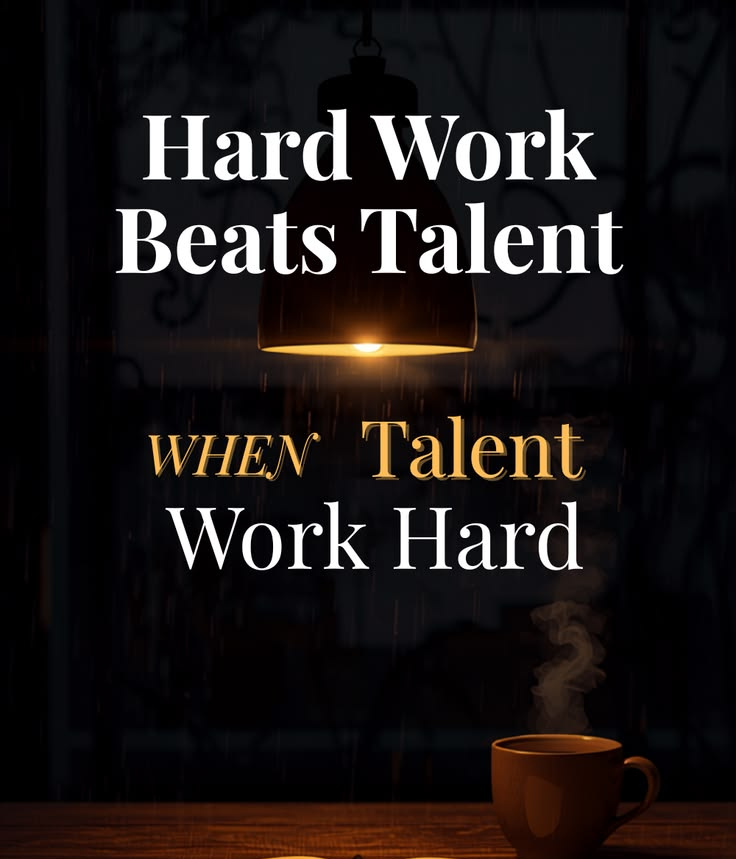
The most common version reads: “Hard work beats talent when talent doesn’t work hard.” It shows up on gym walls, locker room posters, Instagram captions, and commencement speeches, and it’s endured because it names something people intuitively believe that raw ability only gets you so far without the discipline to use it.
Part of why it spreads so easily is that it’s short enough to remember after hearing it once, and it flatters the listener in a specific way: it suggests that whatever you lack in natural ability, you can still win through effort a message almost everyone wants to believe about themselves.
Who Actually Said It?
This exact wording is most widely credited to Tim Notke, a high school basketball coach, with the phrase generally traced back to the late 1990s or early 2000s. The quote reached a much wider audience after NBA player Kevin Durant referenced it around the time he was drafted, and it has also been associated with athletes like Tim Tebow, who has said it’s a line he’s lived by since childhood.
Here’s the honest part most quote sites skip: very little verifiable information exists about Tim Notke beyond this one quote, and at least one source lists the line as attributed to “Unknown” rather than confirming Notke as the original author. So the fairest way to say it is this: it’s widely and consistently credited to Tim Notke, but that attribution isn’t independently confirmed by a documented primary source. If you’re using this quote somewhere that requires accuracy a paper, a publication, a speech with citations its worth noting that caveat rather than stating it as a settled fact.
It’s also worth mentioning that the underlying sentiment that effort can outperform raw ability is far older than this specific phrasing. Variations of the same idea have circulated in coaching and motivational circles for decades, long before this exact sentence became the viral version. Notke, or whoever first phrased it this way, likely condensed a much older piece of common coaching wisdom into a sentence that happened to stick.
This is actually a common pattern with widely shared motivational quotes: a general idea exists in circulation for a long time in slightly different forms, and then one specific phrasing, often shorter and more rhythmic than the rest, becomes “the” version everyone remembers and repeats. That’s likely what happened here. The concept of effort compensating for ability isn’t new; the specific eleven word sentence is what made this particular version spread.
A Brief Historical Note on Similar Sayings
The sentiment behind “hard work beats talent” isn’t new to the Notke era phrasing it echoes a much older idea that shows up throughout motivational history. One well-known example is the line often attributed to Thomas Edison, commonly phrased as “genius is mostly perspiration rather than inspiration a widely repeated sentiment for over a century, though as with most old quotes, it’s worth double-checking the exact wording before citing it formally. The pattern is the same across generations: someone eventually finds a short, memorable way to say “effort matters more than people think,” and that specific phrasing becomes the version everyone quotes, even as the underlying idea keeps getting rediscovered and rephrased.
Where This Quote Shows Up Today
Beyond gym walls, this line has become a staple of short-form video content, workout motivation reels, and team messaging apps. Its short, punchy structure makes it easy to overlay on a training clip or a locker room whiteboard, which is likely a big part of why it’s remained so visible well over two decades after it first started circulating. It’s less a quote people sit and reflect on and more one they glance at right before doing something hard, which says something about its actual function: it’s built for the moment right before effort, not for quiet reflection afterward.

That function also explains why it works so well as a visual printed on a wall, overlaid on a training video, or taped inside a locker. It’s not designed to be analyzed. It’s designed to be seen quickly, at exactly the moment someone is deciding whether to push through discomfort or ease off.
What This Quote Really Means
The quote isn’t really claiming that talent doesn’t matter it’s making a conditional statement. Hard work only “beats” talent in the specific case where the talented person isn’t putting in effort. It’s less a rule and more a warning: natural ability without effort tends to get outworked by someone with less ability and more discipline. It’s a quote about complacency, not really about talent itself.
Read carefully, the sentence is really structured as an “if then.” If talent doesn’t work hard, then hard work wins. It says nothing about what happens when talent does work hard, which is the gap most people miss when they quote it as if it’s a universal law rather than a specific scenario.
Is It Actually True? A Balanced Take
Mostly true, with a caveat worth naming honestly. Hard work reliably beats talent that isn’t being used that part holds up. But talent combined with hard work will generally outperform hard work alone. The quote’s real value isn’t as a literal comparison between two people; it’s as a personal reminder that whatever ability you do or don’t have, effort is the one variable that’s always fully in your control.

Put another way: you can’t control how talented you are relative to someone else, but you can almost always control how hard you work relative to them. The quote’s popularity probably comes from the relief in that idea it hands you back a variable you actually have power over.
Hard Work Beats Talent in Sports
This quote’s roots in basketball and its adoption by athletes like Kevin Durant and Tim Tebow aren’t a coincidence sports is where the gap between “gifted but inconsistent” and “less gifted but relentless” shows up most visibly and most often. Coaches use lines like this specifically because talent alone tends to plateau, while consistent effort tends to keep compounding, season after season, in a way that’s harder to see day to day but obvious over years.
Hard Work Beats Talent in the Classroom
The same principle shows up in academics, just less dramatically. A student who studies consistently, asks questions, and reviews material regularly will often outperform a naturally quick learner who coasts on ability alone, not because the quicker learner isn’t capable, but because consistency compounds in ways raw ability doesn’t automatically provide.

Hard Work Beats Talent in the Workplace
In a professional setting, this quote often gets applied to hiring and career growth. Someone with less experience but a strong work ethic will frequently outpace a more naturally skilled colleague who isn’t putting in consistent effort, particularly over a longer timeline. It’s part of why so many hiring managers say they’d rather train a hardworking beginner than manage a talented person who isn’t motivated.
Hard Work Beats Talent for Parents Raising Kids
Parents often reach for this quote when trying to teach a child the value of effort over natural ability, especially with a child who seems to breeze through certain things early on. Used well, it can help a naturally gifted kid understand that ease now doesn’t guarantee ease later, and it can help a less naturally gifted kid understand that the gap is closable through consistency. Used poorly, it can come across as dismissive of a struggling child’s real effort if it’s said without acknowledging how hard they’re already trying. The quote works best paired with specific encouragement about what a child is already doing right, not as a stand-alone correction.
Signs You’re Relying on Talent Instead of Effort
A few honest questions worth asking yourself if this quote is resonating with you right now:
Are you improving mainly because of natural comfort with the activity or because you’re actually practicing deliberately?
Do you tend to coast when something comes easily and only push hard when you’re struggling?
Has your progress plateaued in a way that more raw effort, rather than more natural ability, would likely fix?
Would the version of you a year from now be proud of the consistency you’re putting in today, separate from how naturally good you already are?
None of these are meant as judgment they are just useful for figuring out whether “hard work beats talent” is actually describing your current situation or whether it’s just a comfortable quote to repeat without acting on.
Common Misunderstandings About This Quote

A few things people tend to get wrong when repeating this quote:
Mistaking it for “talent doesn’t matter.” It doesn’t say that it specifically only applies when talent isn’t paired with effort. Someone talented who also works hard is still, all else equal, likely to outperform someone who only works hard.
Using it to dismiss the role of natural ability entirely. Talent still matters; the quote is about what happens in its absence of effort, not a denial of its existence. Pretending otherwise can set unrealistic expectations, especially in highly competitive fields where natural ability genuinely does create real advantages.
Treating it as an excuse to avoid developing actual skill. Hard work without any skill building isn’t the same as hard, deliberate practice effort has to be aimed at something, not just present. Showing up isn’t automatically the same as improving; the effort needs direction, feedback, and adjustment over time to actually close a gap.
Assuming it applies equally in every field. In some highly specialized areas, natural ability plays a larger role than in others. The quote’s usefulness is more about personal responsibility than a literal, universal formula that applies identically everywhere.
A Reflection for Anyone Feeling Behind
If you searched this quote because you’re comparing yourself to someone who seems more naturally gifted, it’s worth naming that feeling directly instead of just quoting your way past it. Feeling behind someone more talented is uncomfortable, and no quote fully erases that discomfort. What this quote actually offers isn’t a way to feel equal to that person overnight it’s a reminder that the gap isn’t necessarily permanent, and that the one lever you have full control over, your effort, is still available to you regardless of where you’re starting from. That’s a smaller, more honest promise than “hard work guarantees you’ll win,” but it’s also a truer one.
Similar Quotes About Hard Work and Effort
“Talent gets you noticed. Work ethic gets you kept.”
“Nobody’s born disciplined. It’s built one hard morning at a time.”
“Ability opens the door. Effort is what walks through it.”
“The gap between talented and great is almost always just consistency.”
“Motivation gets you started. Discipline is what finishes it.”
“Skill fades without repetition. Effort is what keeps it sharp.”
“Talent is a head start, not a finish line.”
“The hardest worker in the room usually outlasts the most gifted one.”
“Raw ability starts the race. It doesn’t finish it.”
“The quiet ones grinding early are usually the ones winning later.”
“Comfort is the real opponent, not the other person’s talent.”
A Faith-Based Take on Talent and Diligence
For a lot of us, this quote lines up with something scripture speaks to directly that what you’re given matters less than what you do with it.
[VERIFY VERSE] the Parable of the Talents, commonly referenced in this context, is found in Matthew 25, but please confirm the exact wording and translation before quoting or teaching from it.
The core idea tracks closely with the “hard work beats talent” sentiment: talent, in the biblical sense, was never meant to sit unused. Whatever ability you’ve been given, the expectation was always to do something with it which is really just the faith-based version of the same truth this quote is pointing at. It also adds a dimension the secular version of the quote leaves out: the idea that your effort isn’t just about outperforming someone else, but about stewarding something you were given rather than taking credit for producing it yourself.
This reframes the whole idea a little. The secular version of the quote is mostly about competition beating someone else who has more natural ability. The faith-based version shifts the focus toward responsibility instead of comparison: less “how do I outwork the more talented person,” and more “what am I doing with what I’ve already been trusted with.” Both versions point toward effort, but they’re motivated by slightly different things one by winning, the other by faithfulness.
A Short Prayer for Effort and Perseverance
God, thank you for whatever ability you’ve given me, and forgive me for the days I’ve let it sit unused. Give me the discipline to work hard with what I have instead of waiting to feel talented enough. Amen.
Short Versions for Team, Gym, or Locker Room Use
“Outwork it.”
“Talent rests. Effort doesn’t.”
“Show up when it’s easier not to.”
“Discipline beats mood, every time.”
“Do it again tomorrow, even without motivation.”
“Consistency is the actual talent.”
If you’re a coach or team leader looking for more like this, our Encouraging Quotes for Difficult Times and Quotes About Change pages both have material that pairs well with pre game or pre-season use.
How to Actually Live This Quote Out

Repeating this quote doesn’t build discipline on its own it’s a reminder, not a routine. If the sentiment resonates with you, a more practical version usually looks like picking one specific area where you know you’ve been relying on natural ability instead of consistent effort, and deciding on one small, repeatable action tied to it a set number of practice reps, a fixed study block, a daily task you do regardless of mood. The quote works best as a short mental nudge in the moment right before you’re tempted to skip that action, not as a philosophy you meditate on separately from actually doing the work.
A Short Journaling Prompt for This Quote
If you want to actually apply this rather than just read it, try answering this in a few sentences: Where in my life have I been coasting on ability instead of building consistency, and what’s one small, repeatable action I could start tomorrow to change that? Writing the answer down tends to make it far more actionable than just agreeing with the quote in the moment and moving on.
Variations You’ll See Online
Because this quote is so widely shared, you’ll come across slightly different phrasings of it some swap “beats” for “beats out,” some drop “when,” some restructure it as “hard work always beats talent that doesn’t work hard.” These are generally just informal rewordings of the same core sentence rather than separate, independently sourced quotes, so treat closely worded variations as the same idea rather than different sayings with their own separate origin.
Using This Quote in a Speech or Presentation
If you’re planning to use this line in a speech, presentation, or written piece, it tends to land better paired with a specific, personal example rather than standing alone. A bare quote can feel like a placeholder; a quote followed by one real sentence about a moment effort actually mattered more than ability tends to stick with an audience far longer. If accuracy matters for your context, briefly noting that the attribution is widely repeated but not fully confirmed also adds a layer of credibility that a plain, uncredited restatement doesn’t.
A Note for Coaches Building a Season Long Culture Around This Quote
Coaches sometimes put this quote up once at the start of a season and expect it to do ongoing work on its own but a single poster tends to fade into the background within a few weeks. It holds up better as a recurring reference point rather than a one time statement: brought back up specifically in moments where a player is tempted to coast, or used to frame a hard practice rather than just decorating a wall. The quote works less as a slogan and more as a lens something you return to and apply in specific moments, not something you display once and consider finished.
FAQ
Who said “hard work beats talent when talent doesn’t work hard”?
It’s most commonly credited to Tim Notke, a high school basketball coach, though that attribution isn’t backed by a confirmed original source it’s widely repeated, not definitively documented.
Is it true that hard work beats talent?
Mostly, with a caveat: hard work reliably beats talent that isn’t being used, but talent paired with hard work usually outperforms hard work alone. The quote is really about not wasting what you’re given, not a literal ranking of the two.
What’s a short version of this quote for a locker room or gym?
“Discipline beats mood, every time” is a strong short option it’s specific enough to actually change behavior, not just sound motivational.
Are there similar quotes about hard work and effort?
Yes quotes like “Ability opens the door. Effort is what walks through it” carry a similar message with slightly different phrasing.
Does this quote apply outside of sports?
Yes, the same idea shows up commonly in classroom and workplace contexts, where consistent effort often outperforms unused natural ability over time.
How is this quote different from “practice makes perfect”?
“Practice makes perfect” focuses on repetition improving skill over time, while this quote focuses more on effort compensating for a lack of natural ability in the first place they’re related but not identical ideas.
Is it okay to use this quote even if the attribution is uncertain?
For casual, motivational use, yes most people using it aren’t citing it academically. Just avoid stating the attribution as fully confirmed if accuracy matters in your specific context.
Are there older sayings with a similar meaning?
Yes, the general idea of effort mattering more than raw talent has appeared in various phrasings for a long time, including sentiments often associated with Thomas Edison about genius being mostly hard work. As always with older quotes, verify exact wording before citing formally.
Why do coaches use this quote specifically at the start of a season?
It’s often used to set an expectation early that consistent effort, not just natural ability, will determine outcomes over the course of a season though it tends to work best when revisited throughout, not just stated once.
What’s the difference between this quote and just saying “work hard”?
This version specifically contrasts effort against unused talent, which makes it feel more pointed and personal than a generic “work hard” message it implies a real comparison, not just general encouragement.
A Closing Note
Whether or not Tim Notke was the first person to say it, the idea behind this quote has outlasted the question of who said it first probably because most of us already know, somewhere honest inside us, exactly which one we’ve been leaning on lately: our ability, or our effort. If it’s been effort you’ve been skipping, this quote isn’t really asking you to feel bad about it. It’s just asking you to start again tomorrow.
Quotes like this one are easy to nod along with and forget by the next morning. The difference between the people who actually benefit from a line like this and the people who just enjoy reading it usually comes down to one small, boring, repeated decision showing up again, especially on the day it would be easier not to.